Research Fields
Research
We drive applied research that accelerates Europe’s transition toward a carbon-neutral energy system.

Research Fields
We drive applied research that accelerates Europe’s transition toward a carbon-neutral energy system.
We focus on applied research to support the transformation toward a carbon-neutral, resilient energy system in Europe. Our work supports our founding members – EDF and KIT – in building a Net-Zero and sustainable energy future in a dynamic market environment through innovation, knowledge transfer, and internationalization.
“We deliver scientific analyses and innovative solutions to overcome technological barriers and reduce risks in industrial projects.”
Holistic
Our research adopts a holistic systems perspective to help partners evaluate technical and market risks and opportunities while positioning technologies strategically for long-term viability. By integrating environmental, economic, and social dimensions, we ensure that innovation processes are both responsible and future-oriented.
Our methodology combines rigorous scientific analysis with practical decision-support tools. We address uncertainties and regional specificities to develop solutions that are contextually relevant and can be adapted across different settings. By monitoring market trends, validating concepts with empirical evidence, and incorporating spatial and socio-economic and environmental factors, we enable informed and resilient technology development.
Impact
Critical to our approach is understanding the wider implications of technological change and natural solutions. We investigate renewable, bio-based, geothermal, and hydrogen energy systems to determine how these can be effectively integrated into regional and national infrastructures and work on the complementarity of technological and natural solutions.
To substantiate our findings, we quantify impacts across multiple dimensions: employment, value creation, environmental performance, and resource use. Our analyses include CO₂ mitigation potentials, land-use efficiency, and comprehensive cost-benefit indicators. This evidence-based foundation supports sustainable industrial strategies and informed policy decisions.
Topics
Our work is organized around four interconnected areas that together address the technical, environmental, economic, and regulatory dimensions of energy transition. From regional energy planning and environmental assessment to policy analysis and breakthrough technology development, these themes form an integrated framework for advancing Europe’s path to climate neutrality and ecological transition.
Explore our research fields to dive deeper into the methodologies and focus areas driving our innovation.

Achieving climate neutrality at the territorial level requires integrated approaches that combine spatial planning, digital innovation, and stakeholder engagement. Changes in population dynamics, forest coverage, and agricultural land use are key variables that challenge the deployment of renewable energy systems, particularly in France and Germany. At the same time, both countries must reduce greenhouse gas emissions while continuing to ensure reliable energy supply. This creates a strong need for tools that support evidence‑based decision‑making and enable long‑term monitoring of transformation efforts.
Thus, we investigate how regions can accelerate decarbonisation through local energy systems, decentralised networks that produce, store, and distribute energy close to where it is used. Our research integrates spatial analysis and social sciences to adapt renewable and low‑carbon solutions to specific regional contexts.
Energy planning at urban and regional scales demands robust data infrastructure and analytical methods capable of capturing spatial and temporal complexity. We utilize Geographic Information Systems (GIS) and AI-supported techniques for mapping and analyzing energy supply, demand, land use, and infrastructure integration, working primarily with open and publicly available data. These tools enable us to assess resource availability, infrastructural constraints, environmental conditions, and societal acceptance.
We evaluate how geographic, environmental, and socio-economic factors shape energy solutions in specific locations. Our models support scenario analysis for decarbonization pathways, assessment of infrastructure investment needs, and evaluation of policy interventions. We develop analytical frameworks designed to be accessible and actionable for regional planners and policymakers. This includes modelling mobility transition pathways and creating digital tools that track key indicators for energy use and emissions. By connecting these diverse factors, we identify practical pathways that match regional strengths and constraints with climate targets.
Central to our work is understanding how electricity, heat, and renewable energy can be integrated to enhance flexibility, efficiency, and resilience. We design multi-energy configurations that can adapt to changing policy frameworks, market dynamics, and climate impacts. Our research addresses several interconnected challenges. We conduct spatial assessments of renewable energy potentials and analyze how stakeholders and governance structures influence energy transitions. We support regional energy system planning and develop digital monitoring tools for real-time optimization. Our work also investigates industrial decarbonization pathways, including electrification, green hydrogen, low-carbon fuels, and carbon capture technologies.
We examine how land-use practices, industrial activities, and ecosystem dynamics interact at regional and local scales to support sustainable development pathways. By combining environmental science with economic analysis, we develop and apply methods and tools that quantify impacts, assess nature-based solutions, and support strategic decision-making.
Our work connects empirical observations from experimental sites with analytical frameworks to evaluate mitigation measures. We investigate forest restoration, peatland rewetting, and grassland management, measuring their contributions in terms of carbon sequestration, biodiversity increases, and ecosystem services. These assessments use both physical indicators and monetary valuation to provide comprehensive evidence for policy and investment decisions.
We apply established methodologies, including Life Cycle Assessment, Biodiversity Footprint, and Planetary Boundaries frameworks, to evaluate the environmental performance of technologies, projects, organisations, and policies. Our analyses quantify how interventions affect climate, resource use, and ecological systems while also assessing regional co-benefits such as employment, well-being, and fiscal effects.
We conduct cost-benefit analysis and externality assessments that guide sustainable investments and inform corporate strategy development. Our work examines how environmental legislation, land-use planning, and stakeholder engagement establish effective management practices. We contribute to international standards on environmental and biodiversity management.
The viability of energy system transformation depends on the evolution of regulatory frameworks, market structures, and policy instruments. We examine this evolution across multiple scales – from European market integration to local energy community governance – with particular focus on Germany and France.
We analyze how energy markets can be redesigned to accommodate high shares of renewable energy while maintaining reliability and affordability. Our research addresses capacity market mechanisms, offshore bidding zones, grid management strategies, and multi-energy system flexibility. Using data-driven quantitative methods, we estimate power prices and simulate decarbonized energy systems under diverse market design scenarios. This provides market intelligence that informs strategic decision-making for industry and policymakers.
We evaluate how regulatory instruments – from carbon pricing to renewable energy mandates – perform in practice. Our assessments examine feasibility, efficiency, and equity implications through combined qualitative and quantitative approaches. This evidence base supports the design of more effective policy frameworks.
Beyond traditional market structures, we investigate bottom-up innovations including peer-to-peer energy trading and energy communities. We develop decision algorithms that help prosumers maximize economic and social benefits within these new configurations. By comparing approaches across jurisdictions and governance levels, we identify robust design principles and business models that can adapt to evolving technological and regulatory landscapes.
Deep decarbonization requires breakthrough technologies that can scale from laboratory research to industrial application. Our work spans the entire innovation chain, from fundamental materials research to field demonstrations and techno-economic assessment. We focus on three technology domains addressing critical gaps in the energy transition: geosciences for subsurface resources and storage, bioenergy for sustainable carbon cycles, and hydrogen and other alternative fuels for hard-to-electrify sectors.
Our approach combines experimental work with system-level analysis to ensure technologies are evaluated for both technical performance and integration into energy system architectures. Through our specialized laboratories – including a geoscience laboratory and three hydrogen laboratories for materials research and high-temperature electrolysis – we de-risk innovation by validating concepts under realistic conditions and assessing economic viability and environmental sustainability at scale.
The subsurface serves dual roles in energy transition – as a source of geothermal energy and as a storage medium for heat and CO₂. Our geoscience laboratory investigates these potentials through experimental and analytical research. We explore both deep and shallow geothermal systems. Our deep geothermal research examines next-generation technologies including Enhanced Geothermal Systems, Closed Loop Systems and co-exploitation concepts that combine heat extraction with raw material recovery. Shallow geothermal research focuses on improving ground-source heat pump systems and developing large-scale underground thermal energy storage solutions for long duration and seasonal energy management. In addition to geothermal applications, we analyze natural and stimulated geological hydrogen production, considering recoverable volumes, production costs, and environmental impacts. Our work on CO₂ geological storage examines cost evolution across Europe, realistic deployment potential, and long-term monitoring requirements to ensure safe and verifiable storage.
We investigate how biomass can be used efficiently and sustainably to replace fossil hydrocarbon extraction by providing renewable carbon and energy for fuels, heat, and industrial applications, while also contributing to carbon removal through pathways such as BECCS and long-term carbon storage in bio-based products or biochar. Taking a holistic view of feedstock sustainability, environmental impacts, and competing uses, such as food production, land use, and material applications, we assess how bioenergy interacts with other decarbonization and carbon removal strategies, and how limited biomass resources can be allocated most effectively across sectors. Our work covers the entire value chain, from feedstock availability and production pathways to logistics, conversion technologies, and end uses. Key research areas include resource assessment, synergies between biofuels and e-fuels, the role of bioenergy in energy systems with high shares of renewable electricity, and the potential of biochars as a durable carbon sink.
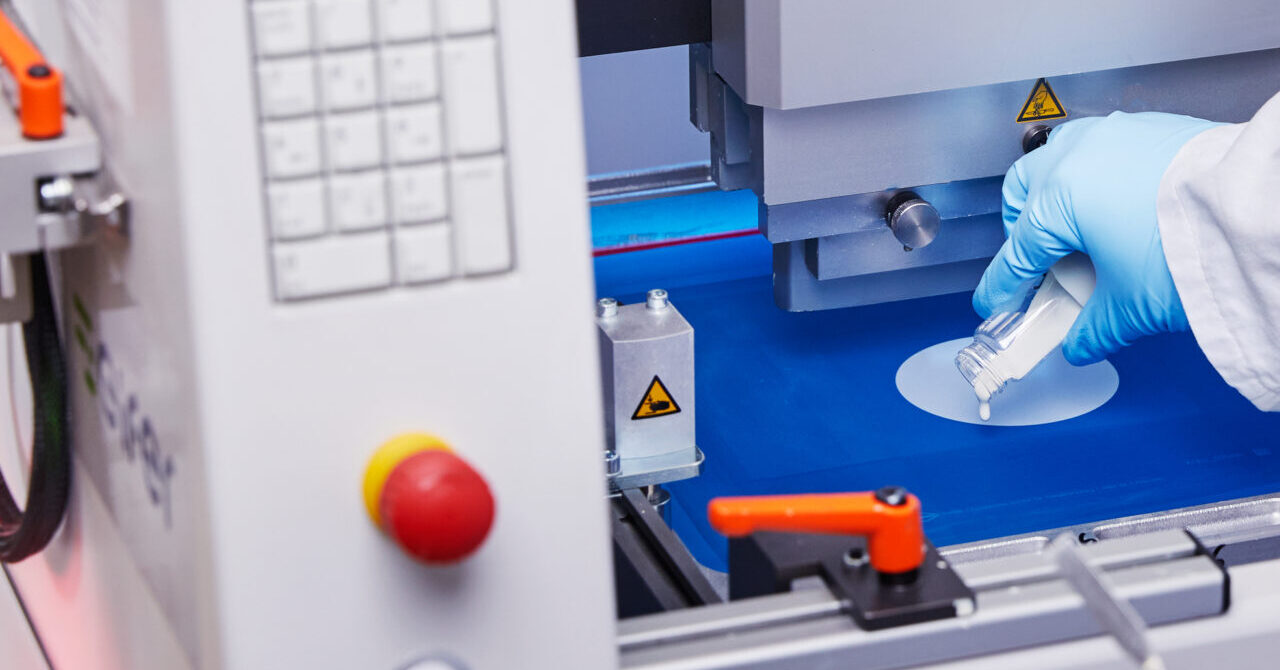
Our three specialized hydrogen laboratories – ENERMAT (hydrogen materials, components, and e-fuels), EIFER/ICT Lab (long-term testing of high-temperature solid oxide cells), and FCE Test Lab (low-temperature hydrogen technologies) – support the technology value chain from materials development to system validation under real-world conditions.
We investigate and develop innovative solutions across the complete electrolytic hydrogen value chain. For production, we focus on low-carbon hydrogen generation through both low-temperature electrolysis (PEM, alkaline) and high-temperature technologies (solid oxide, protonic ceramic-based), optimizing each for efficiency, durability, and cost-effectiveness. Our work on storage and compression addresses the specific needs of industrial and mobility applications, from stationary systems to heavy-duty transport. We study hydrogen distribution protocols and modeling – onshore and offshore – tackling the unique challenges of hydrogen’s physical properties to ensure safe and efficient delivery. For usage, we explore applications in hard-to-electrify sectors such as heavy industry and long-distance transport, identifying where hydrogen can complement or outperform battery-based solutions. Our research tackles critical technological bottlenecks that currently limit deployment: improving system efficiency and reducing electricity consumption, enhancing durability and resilience of electrolysis stacks, developing smart control systems and diagnostic tools, ensuring hydrogen quality through advanced sensor technologies, and supporting scale-up from laboratory to gigawatt-scale infrastructure. In addition, we investigate alternative fuels including biofuels, e-fuels, and e-biofuels for aviation, maritime transport, and chemical industries. We analyze production pathways, evaluate deployment strategies, and examine how these fuels interact with other decarbonization options to maximize system benefits while ensuring sustainability.