Laboratories
EIFER/ICT Lab
High temperature hydrogen technologies and hydrogen purity

Laboratories
High temperature hydrogen technologies and hydrogen purity
The EIFER/ICT Lab has been operated in collaboration with the Fraunhofer Institute for Chemical Technology (ICT) since 2005. The laboratory is dedicated to: • the long-term operation (> 5,000 h) of components based on Solid Oxide Electrochemical Cells. • the development of quality assurance for H2 mobility
Dr. Aline Léon aline.leon@eifer.org
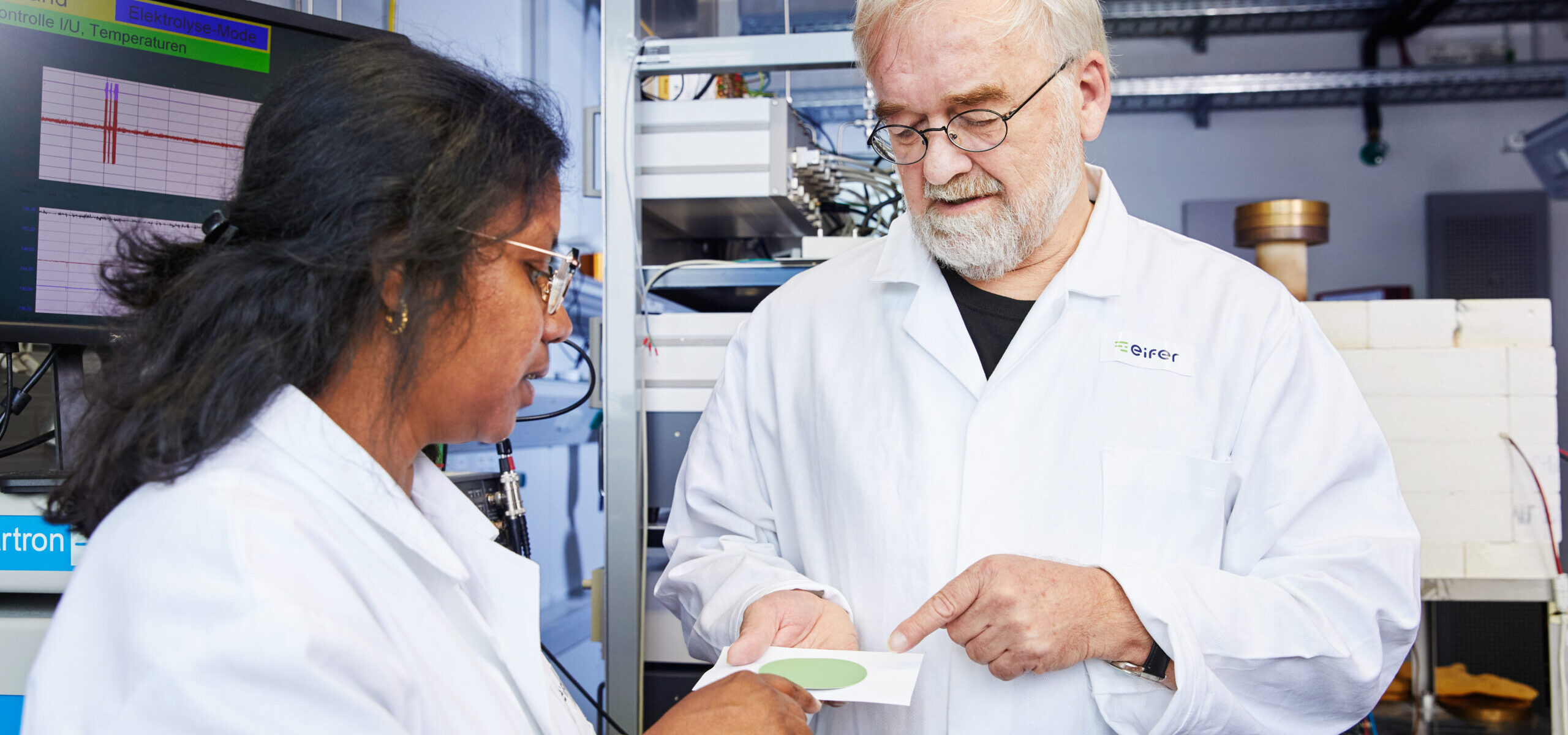
The lab is dedicated to advance steam electrolysis technology.
The lab focuses on lifetime increase with degradation compensation, on fast dynamic operation (On/Off current switching) for power variation and on cost reduction with operation at increased current density.
The lab also focuses on converting CO2 and steam into syngas (a mixture of hydrogen and carbon monoxide), contributing to sustainable energy solutions.
Various analytical techniques from macro down to nanoscale are applied to understand the degradation mechanisms to enhance and optimize the operational lifespan and efficiency of the electrolysis systems.
Development of 24/7 online monitoring to hydrogen refuelling station operators and fine purification system with membranes and sensors.
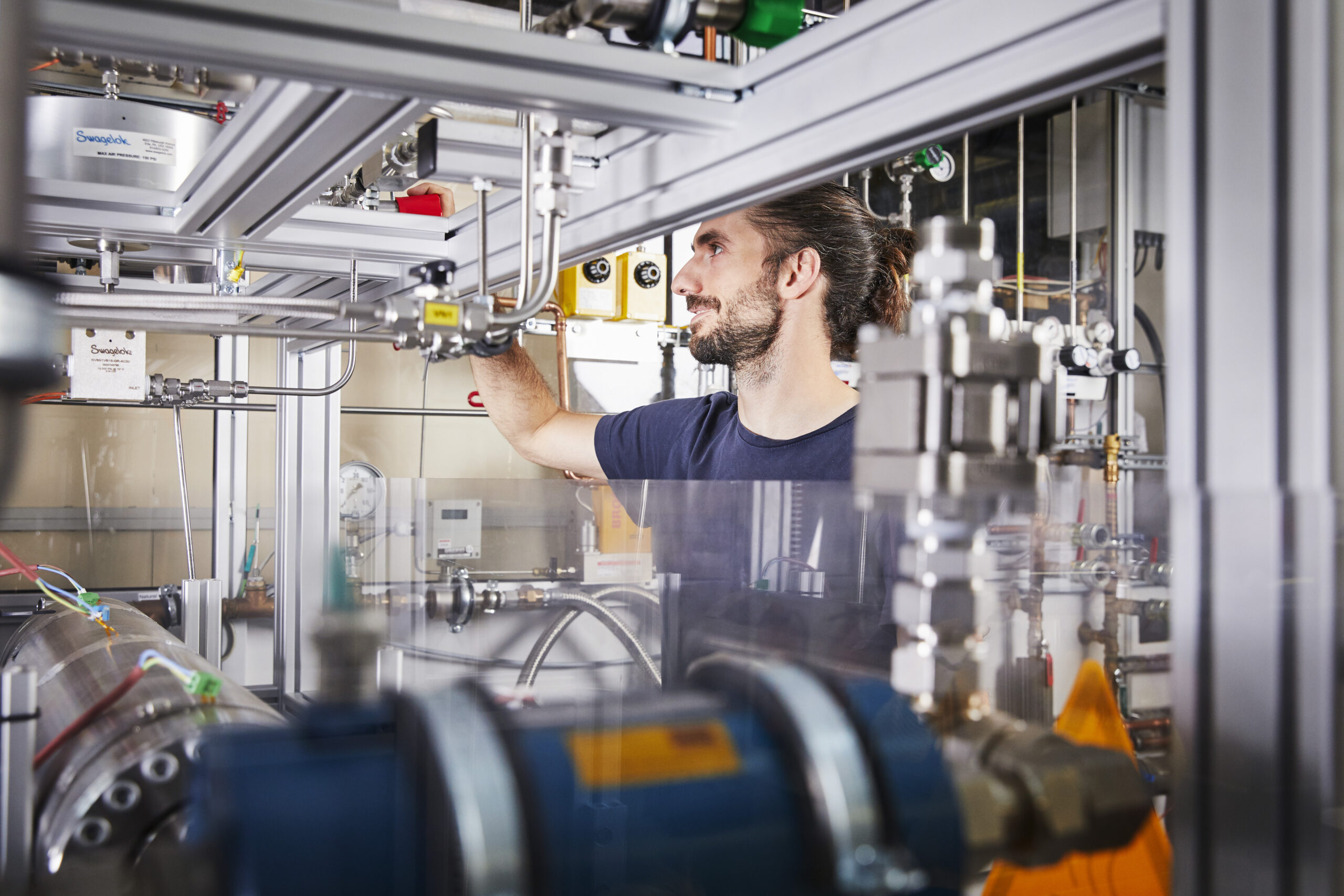
The lab is equipped with eight dedicated test stations for long-term operation of single cell, short stack and power stack and one test station for H2 quality The test stations are provided with all relevant gases for steam electrolysis, fuel cell and co-electrolysis operation. A wide range of experimental setups and research objectives are made available for 24/7 operations under safe conditions.
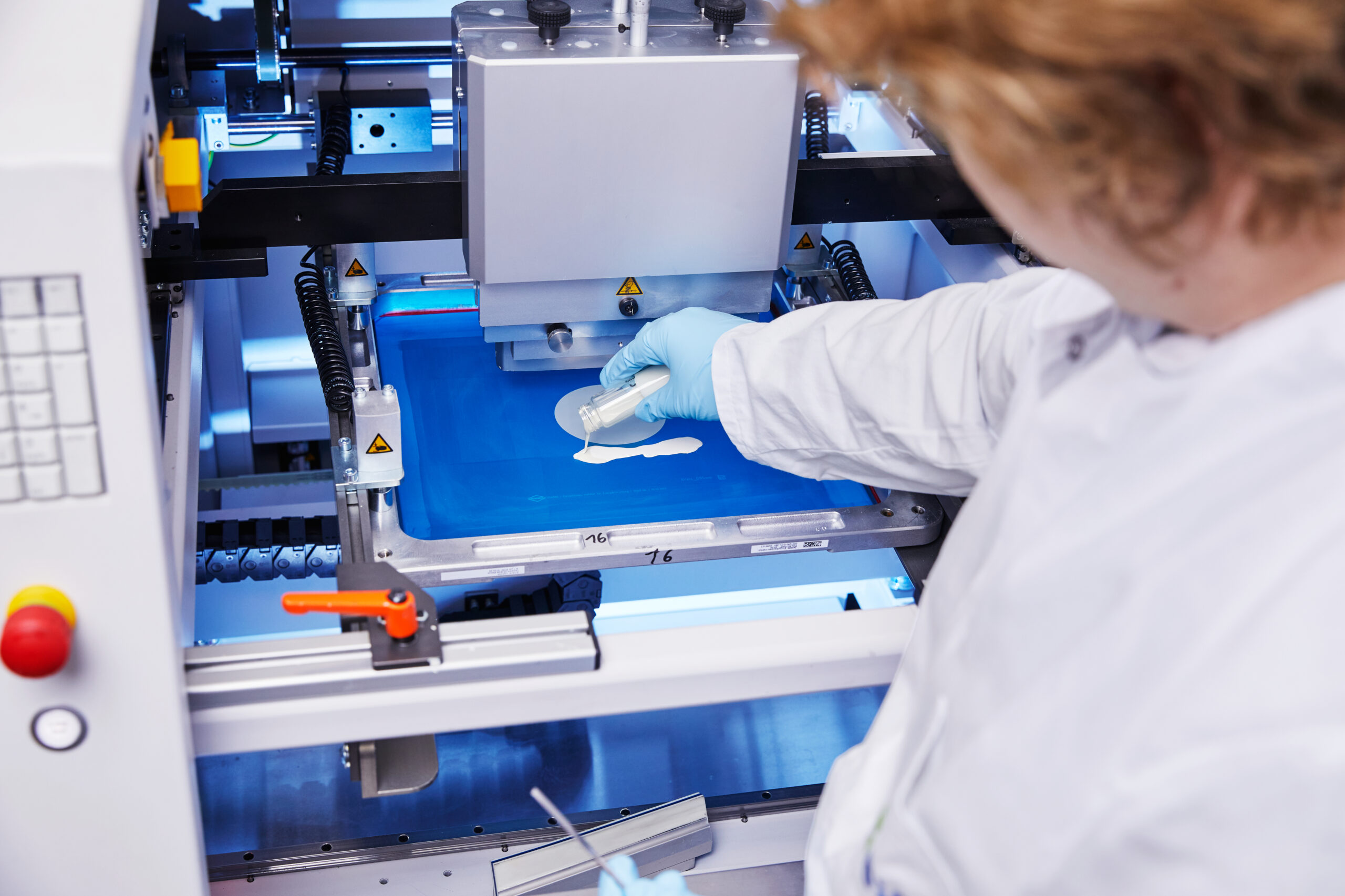
With active areas of 16 cm² and 45 cm² can be tested within a wide range of experimental conditions and performance evaluations.
Ranging from 1 to 7 kW can be tested to provide comprehensive analysis for scale-up towards more industrially relevant systems.
Diagnostic methodologies include electrochemical characterization with I-U curves and in-situ impedance spectroscopy (EIS), as well as post-mortem analysis with classical and advanced analytical techniques.